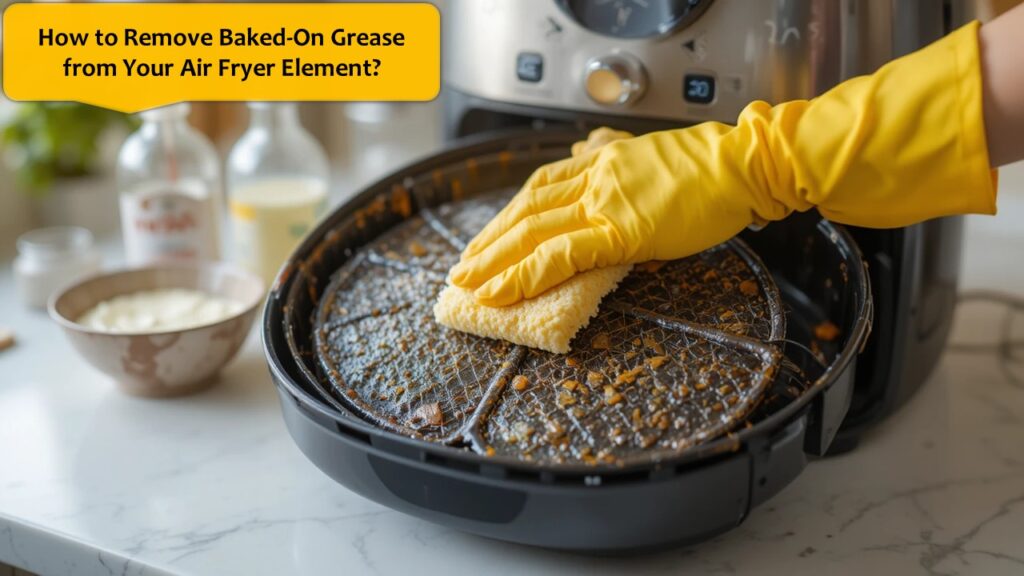
If you’ve been using your air fryer regularly, you know how quickly that once-shiny basket can turn into a sticky, greasy mess. After a few rounds of fries or chicken wings, you’re often left with baked-on residue that seems impossible to remove. Many people wonder if soaking their air fryer basket in vinegar is a good idea — after all, vinegar is a natural cleaner and degreaser.
I’ve tried it myself, and while it does work in some cases, there are a few important things to know before submerging your air fryer parts in vinegar. Let’s take a closer look at what happens, how to do it safely, and when to avoid it entirely.
Why People Use Vinegar for Cleaning Air Fryers?
Vinegar has been a kitchen cleaning staple for decades, and for good reason. It’s:
- Natural and non-toxic
- Affordable and easy to find
- Highly effective at cutting through grease and dissolving food residue
- Deodorizing, leaving your basket smelling fresh
The mild acid in white vinegar helps break down the oils and carbonized food particles that stick to your air fryer basket. When combined with warm water, it softens up the grime, making it easier to wipe or scrub off later.
So yes — vinegar can definitely help clean your air fryer basket. But soaking it for too long or using it on the wrong materials can do more harm than good.
Before You Soak: Check the Manufacturer’s Instructions
Not all air fryer baskets are made the same. Some have a non-stick coating that can react poorly to acidic cleaners like vinegar if exposed for long periods.
Check your manual or product listing for these terms:
- Non-stick coating (Teflon, ceramic, or similar)
- Dishwasher safe parts
- No harsh chemicals or acidic cleaners
If your basket is stainless steel, short soaks in vinegar are safe. But if it’s non-stick coated, you’ll need to be more cautious and limit soaking time to prevent dulling or peeling the coating.
How to Safely Soak Your Air Fryer Basket in Vinegar?
When done correctly, soaking in vinegar can be one of the most effective methods for loosening stubborn grime. Here’s how I do it:
Step 1: Unplug and Cool the Air Fryer
Always make sure your air fryer is unplugged and completely cool before removing the basket. Safety first.
Step 2: Prepare the Vinegar Solution
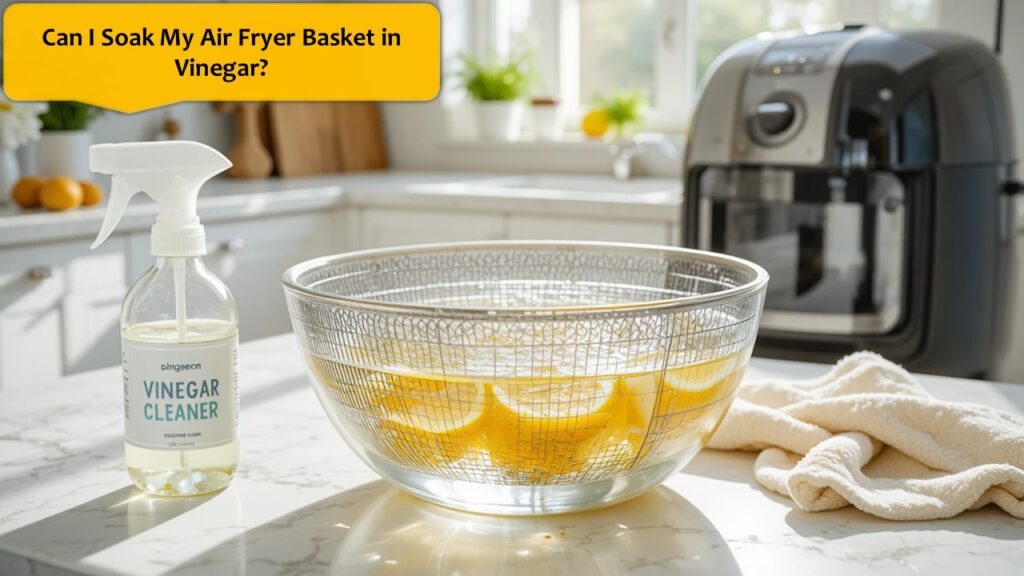
Mix equal parts white vinegar and warm water in a large bowl or your sink. This 1:1 ratio provides enough acidity to cut through grease without being too harsh on non-stick coatings.
Step 3: Submerge the Basket
Place the basket and the crisper tray (if removable) into the vinegar solution. Make sure they’re fully submerged.
Let them soak for 10 to 15 minutes if the grease buildup is light, or up to 30 minutes if the residue is stubborn.
Tip: Don’t soak longer than 30 minutes if your basket has a non-stick coating — prolonged exposure can start to degrade the finish.
Step 4: Scrub Gently
After soaking, use a soft sponge or nylon brush to gently scrub away the loosened grease and food bits. You’ll notice most of the grime will come off easily at this point.
Avoid steel wool or abrasive pads — they’ll scratch the basket surface and ruin its non-stick properties.
Step 5: Rinse and Dry
Rinse thoroughly with warm water to remove any vinegar smell or residue. Then, dry completely with a clean towel or let it air dry before reassembling your air fryer.
When Not to Soak in Vinegar?
While vinegar is generally safe, there are a few cases where soaking your air fryer basket in vinegar isn’t recommended:
- If it has a damaged or peeling non-stick coating.
Vinegar can seep under the coating, causing it to lift or bubble further. - If your air fryer manual warns against acidic cleaners.
Some models, especially cheaper ones, use coatings or finishes that degrade faster when exposed to acids. - If you’ve already soaked it recently.
Frequent vinegar soaks can dull the basket’s appearance and shorten its lifespan. Instead, use vinegar spray for regular cleaning.
Alternative Cleaning Methods (If You Want to Avoid Soaking)
If you’d rather play it safe or your basket isn’t suitable for soaking, try these alternatives that work just as well:
-
Vinegar Spray and Wipe
Mix equal parts vinegar and water in a spray bottle. Spray the basket generously and let it sit for 10 minutes. Then wipe clean with a soft cloth.
This method gives you vinegar’s cleaning power without the prolonged soaking.
-
Baking Soda Paste
Mix 2 tablespoons of baking soda with a few drops of water to form a paste. Spread it on stubborn spots, let it sit for 15 minutes, and then scrub gently.
Baking soda acts as a mild abrasive without harming the coating.
-
Lemon Juice Soak
If you’re worried about vinegar’s acidity, lemon juice is a gentler option. It still cuts through grease and neutralizes odors naturally.
-
Dish Soap and Warm Water
For everyday cleaning, warm water and mild dish soap usually do the trick. Let the basket soak in soapy water for 15 minutes before scrubbing lightly.
How Often Should You Deep Clean with Vinegar?
For regular use, deep cleaning your air fryer basket with vinegar once every 2 to 3 weeks is enough.
If you air fry greasy foods often — like bacon, wings, or fries — consider cleaning it weekly to prevent buildup.
For light use, a quick rinse and wipe-down after each meal will keep it in good shape without frequent vinegar soaks.
Can Vinegar Damage My Air Fryer?
Only if used incorrectly. When diluted and used sparingly, vinegar is perfectly safe for cleaning most air fryer baskets. However, direct or prolonged exposure to pure vinegar (especially overnight soaks) can damage the non-stick coating or metal finishes over time.
Always rinse thoroughly afterward, and never pour vinegar directly into the air fryer body or near electrical parts.
Final Thoughts:
So yes, you can soak your air fryer basket in vinegar, but with a few smart precautions.
Keep your soaking time under 30 minutes, use equal parts vinegar and water, and avoid abrasive scrubbing. For coated baskets, vinegar sprays or baking soda pastes are gentler alternatives that clean just as effectively.
With the right balance, vinegar can be your air fryer’s best friend – keeping it fresh, odor-free, and performing like new.