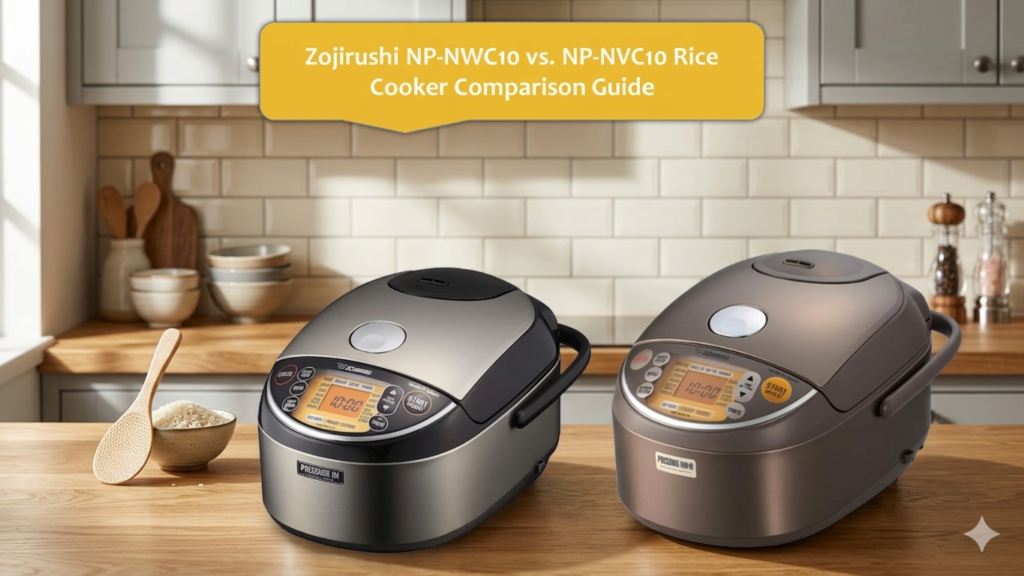
There is a profound difference between “cooked rice” and “perfect rice.” If you grew up with a standard $20 glass-lid pot, the idea of spending hundreds of dollars on a rice cooker might seem like overkill – until you taste the results of Pressure Induction Heating. Recently, I set out to settle a long-standing debate in the culinary world by pitting the Zojirushi NP-NWC10 against its predecessor and cult favorite, the Zojirushi NP-NVC10.
Both of these machines are made in Japan and represent the absolute pinnacle of Zojirushi’s engineering. They don’t just boil water; they use pressurized environments and Artificial Intelligence to alter the cellular structure of the grain. After months of testing everything from delicate Jasmine to stubborn Gaba Brown rice, I’ve realized that while they share the same DNA, they cater to slightly different types of home cooks.
One is a modern powerhouse with a focus on trendy grains like Steel Cut Oatmeal and Jasmine rice, while the other is a legendary “Made in Japan” classic that offers niche features like a “Scorch” setting for those who love a crispy bottom on their rice. If you are ready to stop settling for mushy or uneven grains, here is exactly how these two heavyweights performed in my kitchen.
The Key Difference: Zojirushi NP-NWC10 vs. NP-NVC10 Rice Cooker
The fundamental divide between the Zojirushi NP-NWC10 and the NP-NVC10 is Menu Modernization and Specialized Textures.
- The Zojirushi NP-NWC10 (The Modern Evolution) is the newer model, sporting a sleek “Stainless Black” finish. Its standout feature is the updated AI (Artificial Intelligence) that learns from every cook to adjust the cycle for consistency. It introduces specific settings for Jasmine Rice, Congee, and Steel Cut Oatmeal, reflecting the diverse needs of today’s kitchens. It also features a more advanced multi-level pressure system that automatically selects from three levels.
- The Zojirushi NP-NVC10 (The Niche Specialist) is the older, “Stainless Brown” classic. While it lacks the dedicated Jasmine and Oatmeal settings of the newer model, it possesses a unique “Scorch” setting that toasts the bottom layer of rice to a golden brown – perfect for Persian Tahdig or Korean Bibimbap. It also features a Steam-Reduce setting, which is a lifesaver if you have low-hanging kitchen cabinets that you want to protect from moisture.
In short, the NP-NWC10 is the superior choice for global grain variety, whereas the NP-NVC10 is for the rice connoisseur who values specific traditional textures and moisture control.
Comparison Table: Feature Face-Off – Zojirushi NP-NWC10 vs. NP-NVC10 Rice Cooker
| Feature | Zojirushi NP-NWC10 | Zojirushi NP-NVC10 |
| Heating Tech | Pressure Induction Heating (IH) | Pressure Induction Heating (IH) |
| Logic System | Advanced Fuzzy Logic with AI | Advanced Fuzzy Logic with AI |
| Capacity | 5.5 Cups (1.0 Liter) | 5.5 Cups (1.0 Liter) |
| Finish | Stainless Black | Stainless Brown |
| Special Settings | Jasmine, Steel Cut Oatmeal, Congee | Scorch (Crispy), Steam-Reduce |
| Pressure Levels | 3 Auto-Selected Levels | Automatic Variable Pressure |
| Dimensions | 16.5″D x 15.38″W x 10.13″H | 15.37″D x 10.12″W x 8.62″H |
| Care | Wipe Clean / Hand Wash Inner | Hand Wash Inner |
| Origin | Made in Japan | Made in Japan |
| View Current Price On Amazon | View on Amazon | View on Amazon |
Detailed Comparative Review: The Rice Connoisseur’s Perspective
-
Design: Stainless Black vs. Stainless Brown
When I first placed the NP-NWC10 on my counter, I was immediately struck by the “Stainless Black” aesthetic. It looks incredibly modern and fits perfectly with high-end kitchen appliances. The build quality is exactly what you’d expect from Zojirushi: heavy-duty, with a lid that closes with a reassuring click. The LCD panel is orange-backlit, making it easy to read even in low morning light.
The NP-NVC10, with its “Stainless Brown” finish, has a more traditional look. It’s slightly more compact in height (8.62 inches vs. 10.13 inches), which made a difference on my counter when I needed to open the lid fully under the upper cabinets. The buttons feel a bit more “classic,” but don’t let the older look fool you – this machine feels just as indestructible as the newer version.

Zojirushi Np NWC10XB Pressure Ih Rice Cooker 5.5 Cup (Black)
- Pressurized Cooking and Steaming: Promotes gelatinization and produces sticky and plump rice
- AI (Artificial Intelligence): AI technology learns and adjusts the cooking cycle to get perfect results
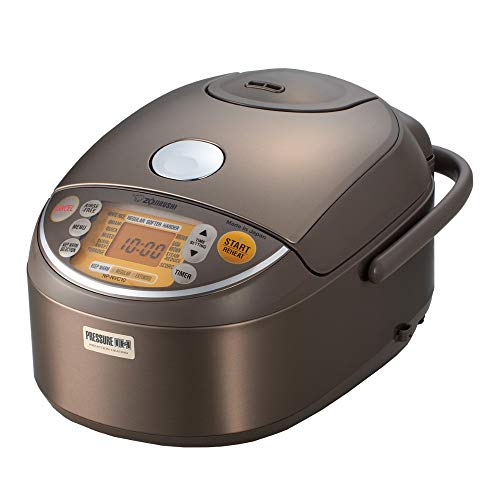
Zojirushi NP-NVC10 Induction Heating Pressure Cooker and Warmer, 5.5 Cup, Stainless Brown, Made in Japan
- Multi-menu cooking functions include settings for white, mixed, sushi/sweet rice, porridge, brown, gaba brown and quick cooking
- Umami setting extends soaking and steaming time for better rice
-
Ease of Use: Artificial Intelligence in Action
Both of these machines utilize Artificial Intelligence (AI), which sounds like marketing jargon until you actually use them. I noticed that if I accidentally used slightly too much water, the machine seemed to “realize” it during the soaking phase and adjusted the steaming time to compensate.
- Navigating the Menus: The NP-NWC10 was easier for my daily breakfast routine. I love steel-cut oatmeal, but it’s a pain to cook on the stove. Having a dedicated button meant I could set the timer the night before and wake up to perfectly creamy oats.
- The LCD Experience: The NP-NVC10 uses a color-coded LCD. While intuitive, I found the newer NWC10’s display to be a bit crisper. Both models include a delightful musical “jingle” to let you know when the rice is done, though you can switch to a standard beep if you prefer a quieter morning.
-
Functions: The Battle of Texture
This is where I had to get scientific. I cooked identical batches of short-grain white rice in both.
- The NWC10 Performance: The Umami setting on this model is a masterclass in flavor. It extends the soaking time at a specific temperature to release sugar from the grain, followed by a high-heat steam. The Jasmine rice setting is the best I’ve ever seen – it keeps the long grains separate and fragrant, avoiding the “clumping” that happens in cheaper IH cookers.
- The NVC10 Performance: The Scorch setting is the reason this model still has a cult following. I used it to make sushi rice with a crispy bottom, and the texture was phenomenal. Additionally, the Steam-Reduce function was highly effective. Living in an apartment with delicate wood cabinets, being able to cut the steam output by 50% was a genuine benefit that the newer model lacks.
-
Maintenance: Keeping the Machine Pristine
One thing I appreciate about high-end Zojirushis is how easy they are to keep clean. Both models feature a detachable stainless steel inner lid. After every cook, I simply popped the lid off and rinsed it in the sink to remove the starchy residue.
The NP-NWC10 has a slightly flatter interior design, which made it easier for me to wipe down with a damp cloth. The “Stainless Black” exterior is also remarkably resistant to fingerprints compared to the older “Stainless Brown.” Both machines require hand-washing for the inner cooking pot; whatever you do, never put that heavy, non-stick platinum-infused pot in the dishwasher – it’s the heart of the machine, and you want to protect that coating!
Zojirushi NP-NWC10 (The Modern All-Rounder) Rice Cooker
Zojirushi Np NWC10XB Pressure Ih Rice Cooker 5.5 Cup (Black)
- Pressurized Cooking and Steaming: Promotes gelatinization and produces sticky and plump rice
- AI (Artificial Intelligence): AI technology learns and adjusts the cooking cycle to get perfect results
Pros:
- Global Grain Support: Dedicated Jasmine and Steel Cut Oatmeal settings are massive time-savers.
- Modern Aesthetic: The Stainless Black finish is beautiful and stays cleaner-looking.
- Advanced AI: Learning cycles lead to incredibly consistent results over time.
- Improved Pressure: 3 auto-selected levels for perfect gelatinization.
Cons:
- Taller Profile: Might be tight under very low cabinets.
- Lacks “Scorch”: You can’t get that toasted bottom layer easily.
Zojirushi NP-NVC10 (The Texture Specialist) Rice Cooker
Zojirushi NP-NVC10 Induction Heating Pressure Cooker and Warmer, 5.5 Cup, Stainless Brown, Made in Japan
- Multi-menu cooking functions include settings for white, mixed, sushi/sweet rice, porridge, brown, gaba brown and quick cooking
- Umami setting extends soaking and steaming time for better rice
Pros:
- The Scorch Setting: Essential for fans of crispy, toasted rice textures.
- Steam-Reduce: Saves your kitchen cabinets from moisture damage.
- Compact Height: Easier to fit into smaller kitchen nooks.
- Proven Reliability: A legendary model known for lasting decades.
Cons:
- No Jasmine Setting: Long-grain rice requires more trial and error with water levels.
- Dated Appearance: The brown finish may not match all modern kitchens.
The Verdict: Which Zojirushi Should You Invest In?
After months of side-by-side cooking, my recommendation depends entirely on how you eat.
I recommend the Zojirushi NP-NWC10 if: You are a modern cook who explores different grains. If your week includes Jasmine rice with Thai curry, steel-cut oats for breakfast, and Congee for a rainy day, the NWC10 is the best tool on the market. Its updated menu and smarter AI make it the most versatile rice cooker Zojirushi has ever produced.
I recommend the Zojirushi NP-NVC10 if: You are a traditionalist or someone with a very specific kitchen setup. If you love the crispy “okoge” (scorched rice) at the bottom of the pot, or if you are worried about steam damaging your expensive kitchen cabinetry, the NVC10 offers features that the newer model simply forgot.
My Personal Choice: I’m keeping the Zojirushi NP-NWC10. The “Stainless Black” looks stunning in my kitchen, but more importantly, the dedicated Jasmine rice setting has become a staple for my weeknight meals. It’s the most “humanized” kitchen appliance I own – it feels like it knows exactly how I want my rice before I even press the button.
Frequently Asked Questions
-
Does the NP-NWC10 come with accessories?
Yes! In the box, I found two measuring cups (one for regular rice, one for rinse-free), a non-stick rice spatula, and a spatula holder that clips onto the side of the machine.
-
Can I cook just one cup of rice in these?
You can, but I’ve found that these machines perform best when you cook at least 2 cups. The pressure system needs a certain amount of volume to circulate the steam perfectly. If you are only cooking for one, consider the 3-cup models instead.
-
Is “Pressure” really better than standard Induction?
Absolutely. Standard Induction Heating (IH) provides even heat, but the Pressure element raises the boiling point, which forces moisture into the center of each grain. This results in rice that stays soft and plump for hours – or even days – on the “Keep Warm” setting.
-
How long does the “Keep Warm” last?
Zojirushi is famous for its “Extended Keep Warm.” I’ve left rice in the NP-NWC10 for 24 hours, and it still tasted freshly cooked. The AI technology ensures the rice doesn’t dry out or turn yellow at the edges.
-
Are these machines loud when they are pressurized?
You will hear a slight “whirring” sound as the internal fan cools the induction coils, and a muffled “click” when the pressure regulator engages. It is much quieter than a standard pressure cooker, but certainly not silent.