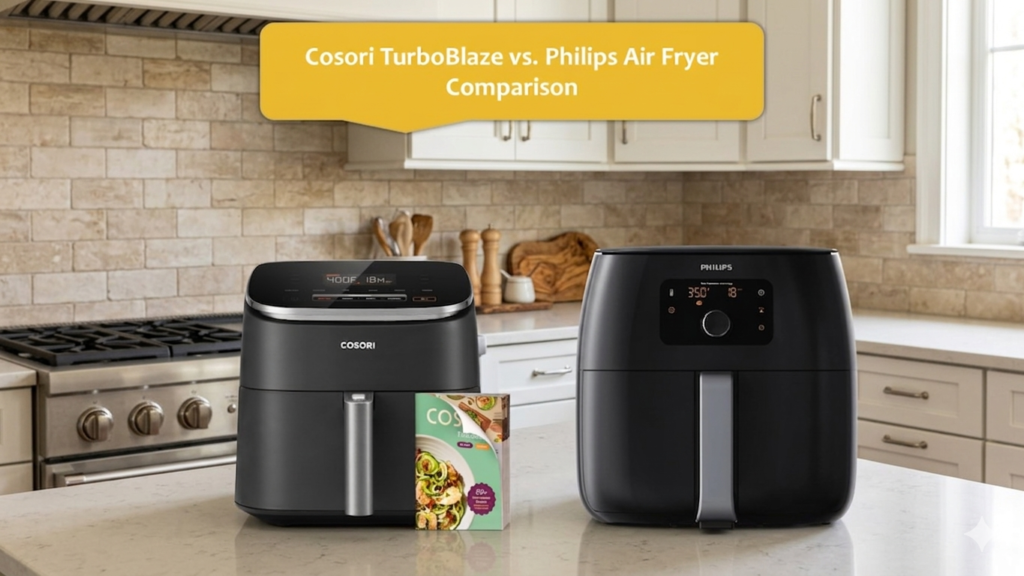
If you walk into my kitchen on a Sunday afternoon, you’ll likely hear the rhythmic hum of a convection fan. For the past month, that sound has been alternating between two very different machines: the tech-forward Cosori 9-in-1 TurboBlaze (6 QT) and the heavy-duty Philips Premium Airfryer XXL (7 QT). These aren’t your basic, entry-level fryers; they are the heavy hitters designed for people who take their “guilt-free” frying seriously.
The Cosori TurboBlaze is the newcomer, boasting a 2024 manufacturing pedigree and a motor system that feels like it belongs in an electric vehicle. On the other hand, the Philips XXL is the seasoned veteran of the premium space, famous for its patented “Starfish” design and a unique focus on extracting fat from your food.
After roasting whole chickens, dehydrating racks of jerky, and attempting to find the perfect French fry, I’ve realized that while both machines aim for the same “crispy on the outside, tender on the inside” goal, they take wildly different paths to get there. Whether you are a gadget lover who wants a quiet, multi-speed motor or a health enthusiast looking to pull every last drop of grease out of your bacon, here is how these two giants actually stack up in a real-world kitchen.
The Key Difference: Cosori TurboBlaze vs. Philips Airfryer XXL
The fundamental divide between the Cosori TurboBlaze and the Philips Premium XXL comes down to Motor Intelligence vs. Lipid Management.
- The Cosori TurboBlaze (The Tech-First Specialist) utilizes a unique 5-fan speed system. By adjusting how fast the air actually moves, it can handle delicate tasks like Proofing bread dough and Drying herbs at low temperatures (down to 90°F). It also uses a Premium Ceramic Coating, which is a significant upgrade for those looking to move away from traditional non-stick surfaces.
- The Philips Premium XXL (The Health-First Powerhouse) is the only machine on the market with Fat Removal Technology. It features a “Twin TurboStar” bottom that literally captures excess fat as it drips off the food. It is also the larger of the two, with a 7-quart (3 lb) capacity, and requires no preheating whatsoever, making it a “speed king” for frozen-to-table meals.
Essentially, the Cosori is a versatile, ultra-quiet multi-tool for the culinary explorer, while the Philips is a high-capacity, heavy-duty machine focused on maximum fat reduction and serving large families.
Comparison Table: Cosori TurboBlaze vs. Philips Premium XXL
| Feature | Cosori 9-in-1 TurboBlaze | Philips Premium XXL (HD9650) |
| Capacity | 6 Quarts | 7 Quarts (3 lbs) |
| Technology | TurboBlaze (DC Motor) | Rapid Air & Fat Removal |
| Fan Speeds | 5 Speeds (Adjustable) | Single Speed (High Velocity) |
| Temperature Range | 90°F – 450°F | 100°F (approx) – 400°F |
| Coating | Premium Ceramic | Non-stick QuickClean |
| Noise Level | Ultra-Quiet (<53dB) | Standard Fan Noise |
| Preheat | Customizable (Fast) | None Required |
| App Support | Manual & Recipe Book | HomeID App (Hundreds of Recipes) |
| Footprint | Compact Square Design | Large, Round-Back Design |
| View Current Price On Amazon | cView on Amazon | cView on Amazon |
Detailed Comparative Review: My Kitchen Observations
-
Design: Stealth Aesthetics vs. Countertop Command
When I first placed the Cosori TurboBlaze on my counter, I was struck by its efficiency. It has a square basket, which I’ve found is much better for “real estate” management. I could fit four large steaks in the corners without them overlapping. The dark gray, matte finish is a blessing for anyone who hates fingerprints, and the machine feels incredibly modern without being flashy.
The Philips Premium XXL is a beast. It is significantly larger and heavier, taking up a substantial amount of counter space (15.5 inches deep and wide). It has a pull-out drawer design on rails, which feels very premium and sturdy – you don’t just “tug” the basket out; it glides. While it lacks the sleek, compact vibe of the Cosori, it looks like a serious piece of professional equipment. If you have low-hanging cabinets, measure twice before buying the Philips.

Cosori TurboBlaze Air Fryer, 9-in-1, 6 Qt, PFAS-Free Ceramic Coating
- 𝘼𝙞𝙧 𝙁𝙧𝙮𝙚𝙧 𝙐𝙥𝙜𝙧𝙖𝙙𝙚: Innovative TurboBlaze Technology delivers a powerful 3600 rpm fan speed and temperatures up to 450℉, achieving crispy, juicy results every time
- 𝙃𝙚𝙖𝙩𝙞𝙣𝙜 𝙐𝙥𝙜𝙧𝙖𝙙𝙚: Cosori's unique 5-fan speed system and precise 90°– 450°F temperature control deliver evenly cooked dishes with perfect texture in every bite

Philips Premium Airfryer XXL, Fat Removal Technology, 3lb/7qt, Rapid Air Technology, Digital Display, Keep Warm Mode, 5 Cooking Presets, HomeID…
- Bring home the Airfryer so you can have 100% taste satisfaction with crispy on the outside and tender on the inside results, using little to no added oil, with up to 90% less fat.
- The Philips Premium Airfryers are the only Airfryers with fat removal technology that extracts and captures excess fat, more fat than other air fryer competitors. Now you can fry your favorite foods with little or no added oil AND remove fat from food, too.
-
Ease of Use: The Silent Operator vs. The Fast Starter
- Operating the Cosori: The first thing I noticed was the sound – or rather, the lack of it. At 53dB, I could literally have a phone conversation while standing right next to it. The 5-fan speed system is a game-changer. When I selected “Proof,” the fan barely whispered; when I hit “Air Fry,” it ramped up to 3600 RPM. The touchscreen on top is responsive and easy to navigate, though I did find myself checking the manual to see which fan speed was best for custom recipes.
- Operating the Philips: This machine is built for the “I need dinner now” crowd. It is one of the few air fryers that actually requires no preheating. I threw a 3 lb bag of frozen wings in, set the timer, and it started cooking immediately. The digital dial and display are intuitive, but it feels more “mechanical” than the Cosori. The “QuickClean” basket is great, but the multi-part drawer system (basket + fat reducer + drawer) means there are more pieces to click into place before you can start.
-
Functions: Culinary Range vs. Healthy Results
- The Cosori Advantage: The 90°F to 450°F range is where the TurboBlaze wins for me. I used the 90°F setting to proof a batch of dinner rolls, and the environment was perfectly controlled. Later that day, I cranked it to 450°F for a “Broil” setting on some asparagus, and it achieved a char that most air fryers (which top out at 400°F) simply can’t reach. The ceramic coating is also incredibly slick – food practically slides off the crisper plate.
- The Philips Advantage: The Fat Removal Technology is not just a marketing gimmick. I cooked a batch of bacon in the XXL, and when I pulled out the bottom tray, I was shocked at how much rendered fat was trapped in the “Starfish” base. Philips claims it removes up to 90% of fat, and based on the liquid gold left in the bottom of the pan, I believe them. For roasting a whole chicken, the Philips is superior; it’s the “XXL” for a reason, and it handled a 4 lb bird with room to spare.
-
Maintenance: The Clean-Up Ritual
Cleaning an air fryer is usually the worst part of the experience, but both brands have tried to mitigate the pain.
The Cosori is a dream to wash by hand because of that premium ceramic coating. It feels like a high-end skillet. A soft sponge and warm water are usually all it takes to get it back to showroom quality. Because it’s a 6-quart square, it also fits much more easily into a standard dishwasher rack without taking up the whole bottom shelf.
The Philips is a bit more of a project. Because of the Fat Removal system, you have three main parts to clean: the basket, the fat reducer tray, and the outer drawer. While they are all dishwasher safe, they take up a lot of room. However, the mesh bottom of the Philips basket is removable, which is fantastic for getting at those stubborn bits of stuck-on chicken skin that usually ruin other baskets.
Cosori 9-in-1 TurboBlaze (The Modern Enthusiast)
Cosori TurboBlaze Air Fryer, 9-in-1, 6 Qt, PFAS-Free Ceramic Coating
- 𝘼𝙞𝙧 𝙁𝙧𝙮𝙚𝙧 𝙐𝙥𝙜𝙧𝙖𝙙𝙚: Innovative TurboBlaze Technology delivers a powerful 3600 rpm fan speed and temperatures up to 450℉, achieving crispy, juicy results every time
- 𝙃𝙚𝙖𝙩𝙞𝙣𝙜 𝙐𝙥𝙜𝙧𝙖𝙙𝙚: Cosori's unique 5-fan speed system and precise 90°– 450°F temperature control deliver evenly cooked dishes with perfect texture in every bite
Pros:
- Whisper Quiet: The quietest air fryer I have ever used.
- Ceramic Coating: No PTFE/PFOA worries and incredibly easy to clean.
- Wide Temp Range: 90°F (Proofing) to 450°F (Searing) is unmatched.
- Variable Fan Speeds: 5 settings allow for precision textures.
Cons:
- 6 QT Capacity: While large, it is noticeably smaller than the Philips XXL.
- Preheat Recommended: For the best “Turbo” results, you still need a quick preheat.
Philips Premium Airfryer XXL (The Family Workhorse)
Philips Premium Airfryer XXL, Fat Removal Technology, 3lb/7qt, Rapid Air Technology, Digital Display, Keep Warm Mode, 5 Cooking Presets, HomeID…
- Bring home the Airfryer so you can have 100% taste satisfaction with crispy on the outside and tender on the inside results, using little to no added oil, with up to 90% less fat.
- The Philips Premium Airfryers are the only Airfryers with fat removal technology that extracts and captures excess fat, more fat than other air fryer competitors. Now you can fry your favorite foods with little or no added oil AND remove fat from food, too.
Pros:
- Massive 7 QT Capacity: The king of whole chickens and large family meals.
- Fat Removal Tech: Actually captures excess grease for healthier results.
- No Preheat: Saves 3-5 minutes on every single cook cycle.
- Premium Rails: The drawer glides out smoothly even when heavily loaded.
Cons:
- Large Footprint: Requires a lot of counter real estate and storage space.
- Price: Generally sits at a much higher price point than the Cosori.
- Fan Noise: Much louder than the TurboBlaze’s DC motor.
The Verdict: Which Fryer Should You Choose?
After a month of back-to-back testing, my choice depends entirely on your household size and your health priorities.
I recommend the Cosori 9-in-1 TurboBlaze if: You are a tech-savvy cook or someone with a smaller household. The ceramic coating, the ultra-quiet operation, and the ability to proof bread and dehydrate fruit make this the most versatile 6-quart machine on the market. It is a sleek, modern appliance that feels like the future of air frying.
I recommend the Philips Premium Airfryer XXL if: You are cooking for a family of four or more and you are focused on heart-healthy meals. The fat-removal technology is a unique benefit that no other brand offers, and the 7-quart capacity makes it a true oven replacement. If you don’t mind the larger footprint and the higher price tag, the Philips is a heavy-duty investment in your kitchen.
My Personal Choice: I am sticking with the Cosori TurboBlaze. The silence of the DC motor and the ease of cleaning that ceramic basket simply fit my daily routine better. Plus, I love having the ability to proof my sourdough in the same machine I use for my wings.
Frequently Asked Questions
-
Does the Philips Fat Removal Technology really work?
Yes. The bottom of the Philips has a swirling “Starfish” design that creates a vortex. This helps separate the rendered fat from the air and traps it at the bottom. In my tests with bacon and chicken thighs, the amount of fat collected was significantly higher than in the Cosori.
-
Is ceramic coating better than the Philips non-stick?
Ceramic is generally more durable and is preferred by those who want to avoid traditional non-stick chemicals. However, Philips uses a very high-quality non-stick that is quite rugged. The Cosori ceramic is “slicker” to the touch and easier to hand-wash.
-
Can I bake a cake in these?
Absolutely. Both can handle an 8-inch round cake pan. The Cosori’s “Bake” setting with a lower fan speed is particularly good for delicate sponges, while the Philips is great for denser cakes like brownies.
-
Why does the Cosori have 5 fan speeds?
Most air fryers have one speed: fast. The Cosori’s DC motor allows it to slow down for “Proofing” (so the dough doesn’t dry out) or “Dehydrating” (so light herbs don’t fly around). It speeds up to 3600 RPM for “Air Fry” to get that maximum crunch.
-
Do I need to buy special accessories for the Philips XXL?
The XXL is a popular model, so there are many third-party “baking kits” and “pizza trays” available. While it comes with everything you need for frying and roasting, you might want to look into the Philips baking master kit if you plan on doing a lot of bread or cakes.