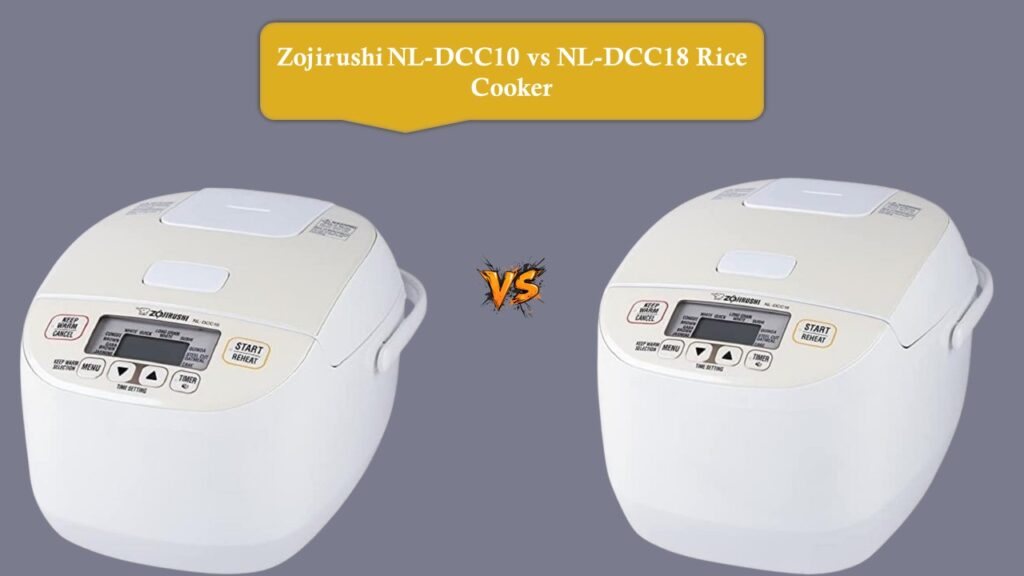
The soft, pearl beige finish of a Zojirushi Micom cooker has a way of making a kitchen feel more intentional, like a space where a meal isn’t just made, but engineered for comfort. Recently, I found myself standing over two such machines: the Zojirushi NL-DCC10 and the Zojirushi NL-DCC18. At first glance, they appear to be identical twins – carrying the same sophisticated “Micom” (Micro Computerized) brain and the same impressive list of grain settings. However, as I started measuring out long-grain Jasmine and steel-cut oats, the practical differences between these two became as clear as the high-contrast LCD screens they share.
These aren’t induction models; they utilize Zojirushi’s famous “Fuzzy Logic” technology. This means the onboard computer monitors the cooking temperature and makes real-time adjustments to ensure the rice is never scorched or underdone. The decision between the 10 and the 18 isn’t about how they cook – it’s about the scale of your culinary ambitions. One is the perfect companion for a standard family meal, while the other is a high-capacity powerhouse built for Sunday meal preppers and large gatherings.
After weeks of living with both, I’ve parsed out the subtle nuances of their footprints and how that extra capacity changes the way you interact with your kitchen.
The Key Difference: Zojirushi NL-DCC10 vs NL-DCC18 Rice Cooker
The defining split between the NL-DCC10 and the NL-DCC18 is purely a matter of Scale and Quantity.
- The Zojirushi NL-DCC10 (5.5-Cup) is the “Standard” size. It handles up to 5.5 cups of uncooked rice (which yields about 11 cups of cooked rice). It is designed to hit the “sweet spot” for families of 2 to 4 people. Because of its smaller inner pan, it tends to reach its peak cooking temperature slightly faster than its larger sibling.
- The Zojirushi NL-DCC18 (10-Cup) is the “Extra-Large” variant. With a massive 1.9-quart capacity (up to 10 cups of uncooked rice), it can produce roughly 20 cups of cooked rice in a single cycle. It is the go-to choice for those who host large dinner parties or like to cook an entire week’s worth of grains in one shot.
While they both feature the 2.5mm Black Thick Inner Cooking Pan, the thermal mass of the 10-cup model is significantly higher, requiring more energy to maintain the perfect “Extended Keep Warm” environment.
Comparison Table: Zojirushi NL-DCC10 vs NL-DCC18 Rice Cooker
| Feature | Zojirushi NL-DCC10 (The Standard) | Zojirushi NL-DCC18 (The XL) |
| Max Capacity (Uncooked) | 5.5 Cups (1.0 Liter) | 10 Cups (1.9 Liters) |
| Technology | Micom (Fuzzy Logic) | Micom (Fuzzy Logic) |
| Heating System | Triple Heater (Bottom, Side, Lid) | Triple Heater (Bottom, Side, Lid) |
| Inner Pan Thickness | 2.5mm Black Thick Pan | 2.5mm Black Thick Pan |
| Color | Pearl Beige | Pearl Beige |
| Weight | Approx. 9 lbs | Approx. 11 lbs |
| Dimensions (DxWxH) | 14.4″ x 16.8″ x 11.2″ | 14.63″ x 10.38″ x 9.78″ |
| Menu Highlights | Jasmine, Quinoa, Cake, Steel-Cut Oats | Jasmine, Quinoa, Cake, Steel-Cut Oats |
| View Current Price on Amazon | View on Amazon | View on Amazon |
Detailed Comparative Review: My Take on the Micom Experience
Design: The Pearl Beige Presence
The first thing that struck me when I set these up was the color. “Pearl Beige” sounds like a 90s office computer, but in reality, it’s a stunning, warm champagne-silver that blends beautifully with both white and stainless-steel appliances.
The NL-DCC10 has a surprisingly wide footprint (listed at 16.8″ wide in some specifications). On my counter, it felt substantial but manageable. The NL-DCC18, despite being the larger capacity model, actually feels “taller” and deeper rather than wider. It has a commanding presence. Both models feature an Extra-Large Steam Vent Cap, which I found incredibly useful during high-powered cycles. In cheaper rice cookers, a large batch of starchy rice often leads to “spittoon” bubbles escaping the vent; with these Zojis, the vent cap effectively breaks down those bubbles, keeping my cabinets free of sticky residue.
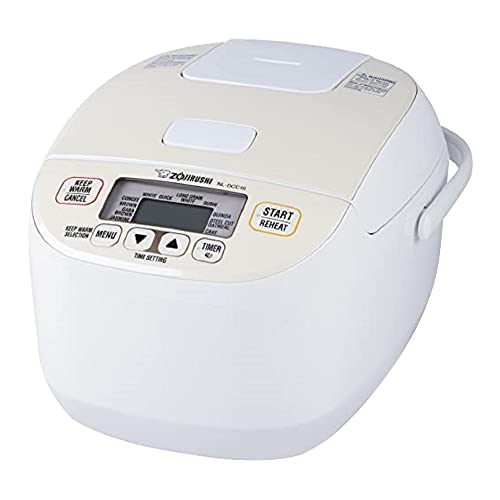
Zojirushi NL-DCC10CP Micom Rice Cooker & Warmer, 5.5 Cups, Pearl Beige
- Capacity: Up to 5.5 Cups / 1.0 Liter of uncooked rice
- Multi-Menu Cooking Functions: Menu settings include white, long grain white, sushi, congee, brown, GABA brown, Jasmine, steel cut oatmeal, quinoa, quick white and cake

Zojirushi NL-DCC18CP Micom Rice Cooker and Warmer (Pearl Beige, 10 Cups)
- Ergonomics: Extra-large steam vent cap allows for high-powered cooking
- Premium Coating: Black thick nonstick coated inner cooking pan
Ease of Use: The “Fuzzy Logic” Advantage
Operating these machines is a masterclass in intuitive design. The LCD panel is high-contrast and very easy to read, even in early morning lighting.
My experience with the Menu:
- White/Long Grain: I used the Long Grain setting for Basmati and was thrilled to find the grains were distinct and fluffy, never clumping.
- The Quinoa Setting: This is a standout feature for both models. Quinoa can easily become soggy in a traditional cooker, but the Micom’s ability to adjust temperature meant I had perfectly “popped” quinoa every time.
- The Delay Timer: This is my most-used feature. I’ve set the timer at 10:00 PM to have hot steel-cut oatmeal ready at 7:00 AM. The machine is nearly silent during this process, so it never disturbed my sleep.
Functions: The Versatility Factor
I decided to push the machines beyond simple rice by using the Cake setting. It sounds like a gimmick, but I made a dense sponge cake in the NL-DCC10. Because of the 2.5mm thick pan, the heat was perfectly even, and the cake came out with a uniform crumb and no burnt edges.
In the NL-DCC18, I tested a massive batch of Congee. Congee (rice porridge) is notorious for boiling over because of the high water-to-grain ratio. The DCC18’s high-capacity bowl and the “Triple Heater” system (which heats from the sides and lid as well as the bottom) kept the simmer perfectly steady. It produced enough silky porridge to feed a crowd without a single drop of overflow.
| Performance Metric | NL-DCC10 (5.5-Cup) | NL-DCC18 (10-Cup) |
| Small Batch (1 Cup) | Excellent; perfect moisture. | Good; but pan feels “empty.” |
| Large Batch (Max) | Flawless consistency throughout. | Incredible volume; great for parties. |
| Steel-Cut Oats | Creamy and uniform. | Perfect for weekly meal prep. |
| Cake Baking | Even browning; easy release. | Large cake; perfect for hosting. |
Maintenance: The Cleanup Reality
Maintenance for both is a breeze, provided you follow the “Golden Rule” of Zojirushi: Hand wash only.
The inner lid is completely detachable. After a cycle of sushi rice (which is quite starchy), I simply popped the lid off and rinsed it under warm water. The Black Thick Inner Cooking Pan has a high-grade non-stick coating. I found that even after the “Extended Keep Warm” had been running for 12 hours, the rice didn’t stick to the bottom. A quick wipe with a soft sponge, and it was back to its original shine.
One minor note: the NL-DCC18 is heavier to wash. The bowl is significantly larger, and if you have a shallow sink, it can be a bit awkward to maneuver. The DCC10 is the more “sink-friendly” option for daily use.
Zojirushi NL-DCC10 (The Family Standard)
Zojirushi NL-DCC10CP Micom Rice Cooker & Warmer, 5.5 Cups, Pearl Beige
- Capacity: Up to 5.5 Cups / 1.0 Liter of uncooked rice
- Multi-Menu Cooking Functions: Menu settings include white, long grain white, sushi, congee, brown, GABA brown, Jasmine, steel cut oatmeal, quinoa, quick white and cake
Pros:
- Perfect Proportions: Ideal for the average family; handles small and medium batches equally well.
- Countertop Friendly: Fits more comfortably under standard cabinets.
- Precision: The 5.5-cup capacity allows for more “focused” heating for delicate grains like Quinoa.
- Faster Heat-Up: Reaches the boiling phase slightly quicker than the XL model.
Cons:
- Limited for Crowds: If you host more than 6-8 people, you’ll have to run multiple cycles.
- Large Footprint: Still takes up a decent amount of space compared to non-Micom units.
Zojirushi NL-DCC18 (The XL Powerhouse)
Zojirushi NL-DCC18CP Micom Rice Cooker and Warmer (Pearl Beige, 10 Cups)
- Ergonomics: Extra-large steam vent cap allows for high-powered cooking
- Premium Coating: Black thick nonstick coated inner cooking pan
Pros:
- Massive Volume: Can feed a small army or a large party with ease.
- Meal Prep King: Perfect for cooking a week’s worth of brown rice or oatmeal in one go.
- Consistent XL Results: The Triple Heater ensures even results even when the 1.9-quart pan is full.
- Durability: Built like a tank with the same high-end 2.5mm pan.
Cons:
- Bulky: Heavy to move and requires a dedicated, deep spot on the counter.
- Inefficient for Small Batches: While it can cook 1 cup of rice, the results are always better in a smaller vessel.
- Cleaning: The large bowl can be cumbersome to hand-wash in smaller sinks.
The Verdict: Which Micom Should You Buy?
After weeks of grains, cakes, and porridge, the choice comes down to your Cooking Frequency and Crowd Size.
I recommend the Zojirushi NL-DCC10 if: You are cooking for 1 to 4 people on a regular basis. It is the most practical size for 90% of households. It handles the “Tuesday night rice” just as well as it handles a batch of steel-cut oats for two. It offers all the high-end Fuzzy Logic benefits without taking over your entire counter.
I recommend the Zojirushi NL-DCC18 if: You are a “Bulk Cooker” or have a large family of 5 or more. If you find yourself frequently hosting holiday dinners or if you like to prep 10 cups of quinoa on Sunday to use in salads all week, the DCC18 is an absolute necessity. It provides a level of volume that the smaller model simply can’t touch, without sacrificing the texture quality.
My Personal Choice: I personally stick with the NL-DCC10. The 5.5-cup capacity is plenty for my family, and I find it slightly more convenient to clean and store.
Frequently Asked Questions
- What exactly is “Micom” technology?
Micom stands for Micro Computerized. It means the rice cooker has a brain (Fuzzy Logic) that allows it to adjust the cooking time and temperature based on the amount of rice and water it detects. This prevents the rice from being too mushy if you’ve added slightly too much water.
- Can I use the NL-DCC18 for just one cup of rice?
Yes, you can. However, rice cookers generally perform best when they are between 30% and 70% full. While the DCC18 will cook one cup of rice perfectly, you might find the texture is slightly better in the DCC10 because there is less “empty space” for steam to dissipate.
- How long does the “Extended Keep Warm” last?
Zojirushi’s Extended Keep Warm is legendary. It can keep rice at a safe, delicious temperature for up to 24 hours. However, for the best flavor, I usually recommend eating it within 8-12 hours. After that, even the best rice starts to lose its “fresh” aroma.
- Why is the inner pan so thick (2.5mm)?
The thickness of the pan is crucial for heat retention and even distribution. In thinner, cheaper pans, you get “hot spots” where the rice at the bottom burns while the top is still wet. The 2.5mm pan ensures the heat travels evenly around the entire curve of the bowl.
- Does the Pearl Beige finish show scratches?
The clear-coated finish is very resilient. It’s much more forgiving than polished stainless steel, which tends to show every fingerprint and smudge. A quick wipe with a damp cloth is all it takes to keep it looking brand new.