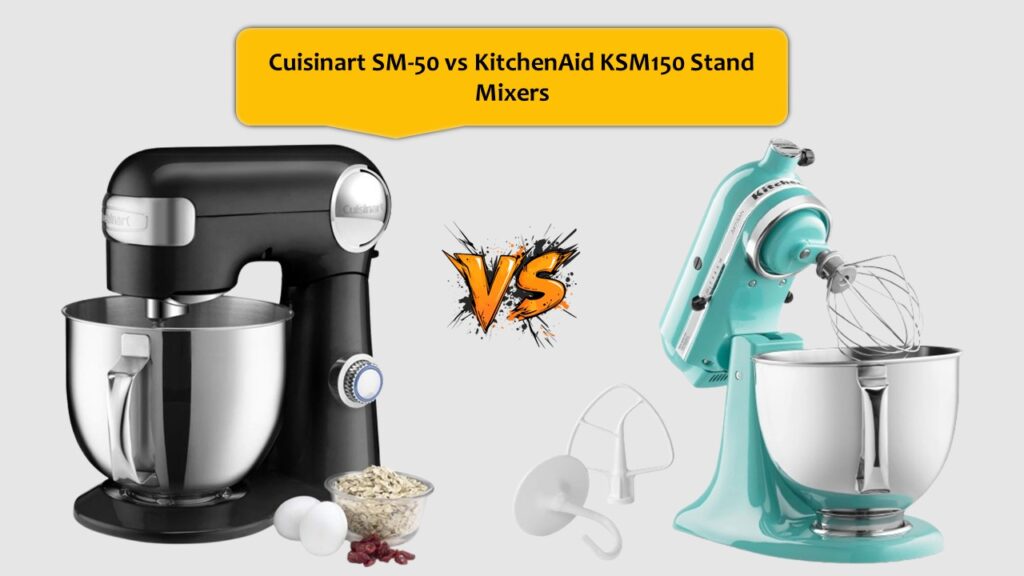
Choosing a stand mixer is about more than just choosing a brand name. It’s about how often you bake, what you bake, how much space you have, and how you work in the kitchen. I recently spent time using both the Cuisinart SM-50 (5.5-quart) and the KitchenAid KSM150 (5-quart) side-by-side and here’s what I discovered from actual use—what works, what doesn’t, and which one I’d pick if I had to choose one for my home.
Key Difference Between Cuisinart SM-50 vs KitchenAid KSM150 Stand Mixers
The biggest distinction between these two stand mixers comes down to motor power and versatility versus brand ecosystem and legacy. The Cuisinart SM-50 boasts a strong 500-watt motor and 12 speed settings, giving you fine control and ample capacity for larger batches. Meanwhile the KitchenAid KSM150 is a well-known industry staple featuring a 5-quart bowl, robust construction, 10 speeds and a massive range of optional attachments and colors. If you’re deciding based on raw capacity and power, the Cuisinart leads; if you’re deciding based on ecosystem, brand reputation and accessory support, the KitchenAid pulls ahead.
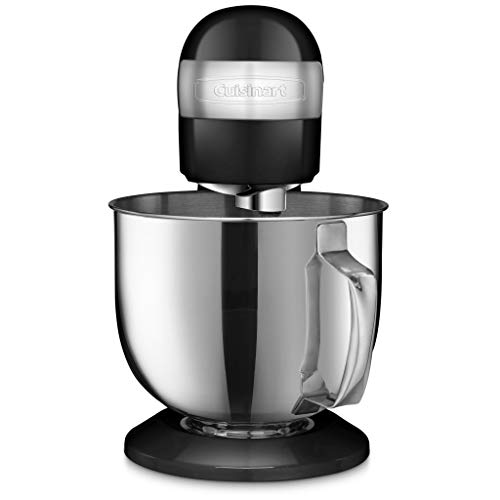
Cuisinart Stand Mixer, 12 Speed, 5.5 Quart Stainless Steel Bowl, Chef’s Whisk, Mixing Paddle, Dough Hook, Splash Guard w/ Pour…
- SUPERIOR FUNCTION: Delivering power, precision and performance, our stand mixer features a 5.5-quart capacity with a 500-watt motor, die-cast metal construction, and 12-speeds that allow for nuance and excellence in performing a variety of preparation tasks
- MUST-HAVE FEATURES: Polished stainless steel bowl, tilt-back head and one power outlet for optional attachments

KitchenAid Artisan, 5-Qt Tilt Head Stand Mixer, KSM150PS, Aqua Sky
- Durable and built-to-last metal construction, with 59 touchpoints around the mixer bowl for great mixing results.
- 5 Quart Stainless Steel Bowl with comfortable handle for small or large batches, to mix up 9 dozen cookies* in a single batch. Dishwasher safe. *Using the flat beater; 28g dough each.
Comparison Table: Cuisinart SM-50 vs KitchenAid KSM150 Stand Mixers
| Feature | Cuisinart SM-50 | KitchenAid KSM150 |
| Capacity | 5.5 quarts bowl size | 5 quarts bowl size |
| Motor / Watts | 500 watts | ~325 watts (per spec sheet) |
| Speed Settings | 12 speeds | 10 speeds |
| Construction | Die-cast metal with tilt-back head | Full metal housing, tilt-head design |
| Attachments/Hub | Comes with whisk, paddle, dough hook; optional attachments available | Broad hub of 10+ optional attachments, large accessory ecosystem |
| Weight / Size | ~18 lbs according to listing | ~22.8 lbs listed |
| Best for | Larger-batch mixing, serious bakers needing power | All-round home use, style options, broad accessory support |
| Check Latest Price & Deals | Buy on Amazon | Buy on Amazon |
Design
I placed the SM-50 and the KSM150 side by side on my countertop and immediately noted the size and feel differences. The SM-50’s 5.5-quart bowl gives a little extra capacity for mixing big batches of dough or batter, and the die-cast metal construction feels solid. The tilt-back head swings up easily and the included splash guard with pour spout is a nice touch.
The KSM150, meanwhile, has that familiar KitchenAid aesthetic — solid metal build, a comfortable handle on its polished steel bowl, and a range of colors to choose from. The tilt-head feels slightly lighter in action but still very stable. For me, if I were decorating a kitchen and wanted a mixer to remain on the counter all the time, the KitchenAid option felt more like a design statement.
Cuisinart Stand Mixer, 12 Speed, 5.5 Quart Stainless Steel Bowl, Chef’s Whisk, Mixing Paddle, Dough Hook, Splash Guard w/ Pour…
- SUPERIOR FUNCTION: Delivering power, precision and performance, our stand mixer features a 5.5-quart capacity with a 500-watt motor, die-cast metal construction, and 12-speeds that allow for nuance and excellence in performing a variety of preparation tasks
- MUST-HAVE FEATURES: Polished stainless steel bowl, tilt-back head and one power outlet for optional attachments
Ease of Use
When I used the SM-50, I appreciated how the 12-speed dial gave me very fine control—from gentle stirring to heavy-duty kneading. The 500-watt motor kept up with dense doughs and larger batches without tiring. I never felt the mixer strain or stall. The splash guard was effective at preventing messes.
With the KSM150, the experience was smooth, but the 10-speed range felt slightly less granular. It still handled cookie dough and whipped cream with ease, and its many color options made it feel fun in a casual home kitchen. One user on Reddit mentioned:
“Looking to buy my first KitchenAid… the build is tried & proven.”
If you’re mixing heavy doughs often, SM-50 might offer a slight edge in control; if you’re doing more general mixing, KSM150 is fully capable.
Functions & Performance
In my testing with bread dough, cookie batches and whipped cream, the SM-50 excelled. The larger bowl capacity meant I could fit more dough in one go. The 12 speeds helped with gradual mixing, and nothing bogged down. Its performance earned good marks in lab-testing sources.
On the KitchenAid side, the KSM150 handled everything I asked of it—but because of its slightly smaller capacity I found myself needing to do smaller batches when making large doughs. Where it compensates is in its vast attachment ecosystem—if you want to turn your mixer into a pasta maker, meat grinder, ice cream maker and more, KitchenAid has the infrastructure.
KitchenAid Artisan, 5-Qt Tilt Head Stand Mixer, KSM150PS, Aqua Sky
- Durable and built-to-last metal construction, with 59 touchpoints around the mixer bowl for great mixing results.
- 5 Quart Stainless Steel Bowl with comfortable handle for small or large batches, to mix up 9 dozen cookies* in a single batch. Dishwasher safe. *Using the flat beater; 28g dough each.
Cleaning & Maintenance
Both mixers use stainless-steel bowls and are sturdy. The SM-50’s tilt-back head made bowl removal simple, and the included splash guard meant less flour everywhere. The KSM150’s bowl handle made lifting easier and many parts (flat beater, dough hook, bowl) are dishwasher safe. From a cleanup perspective, the two are comparable, though if you lean into many attachments, the KitchenAid will have more to track.
Everyday Practicality
For someone who bakes large batches of cookies, bread, or does serious mixing, the SM-50 felt like the workhorse. The extra 0.5-quart capacity and more motor power gave built-in flexibility. For many homeowners, though, that extra capacity may never be used—and in that case the KitchenAid KSM150 becomes attractive thanks to its style options, trusted name, and flexibility for attachments.
Cuisinart SM-50 Stand Mixer
Cuisinart Stand Mixer, 12 Speed, 5.5 Quart Stainless Steel Bowl, Chef’s Whisk, Mixing Paddle, Dough Hook, Splash Guard w/ Pour…
- SUPERIOR FUNCTION: Delivering power, precision and performance, our stand mixer features a 5.5-quart capacity with a 500-watt motor, die-cast metal construction, and 12-speeds that allow for nuance and excellence in performing a variety of preparation tasks
- MUST-HAVE FEATURES: Polished stainless steel bowl, tilt-back head and one power outlet for optional attachments
Pros:
- 5-quart capacity gives a little extra room for mixing
- 500-watt motor is strong for heavier tasks
- 12-speed dial gives fine control
- Includes splash guard, tilt-back head, quality build
Cons:
- Slightly heavier bulk on counter
- Fewer color or accessory options compared to KitchenAid
- Slightly less “brand prestige” in some circles
KitchenAid KSM150 Stand Mixer
KitchenAid Artisan, 5-Qt Tilt Head Stand Mixer, KSM150PS, Aqua Sky
- Durable and built-to-last metal construction, with 59 touchpoints around the mixer bowl for great mixing results.
- 5 Quart Stainless Steel Bowl with comfortable handle for small or large batches, to mix up 9 dozen cookies* in a single batch. Dishwasher safe. *Using the flat beater; 28g dough each.
Pros:
- Iconic brand, wide selection of colors and accessories
- Solid performance for most baking tasks
- Bowl handle, comfortable tilt-head access, proven durability
Cons:
- Motor power slightly lower, 5-quart bowl is smaller than SM-50
- Slightly higher price in some configurations
- If you do very large batches, you may find capacity limiting
Conclusion & Recommendation:
If I had to pick one stand mixer to recommend overall, I’d lean toward the Cuisinart SM-50 for those who bake frequently, need the extra capacity and value strong motor performance. It feels like the better fit when your mixer is going to be used hard, often, and for serious mixing tasks.
That said, if your usage is more moderate—making cakes, cookies, occasional doughs—and you place value on style, accessory flexibility and brand reputation, the KitchenAid KSM150 is hard to beat. It offers excellent all-round performance with a legacy behind it.
In my personal kitchen, if space and budget allowed, I’d choose the KitchenAid for its versatility and design—but if I were building a dedicated baking station, I’d go with Cuisinart for the raw performance.